What LASIK Corrects
LASIK corrects nearsightedness, farsightedness and even astigmatism. With a technique called mono-vision, it can reduce the need for reading glasses among patients over age 40 who wear bifocals.


If you are ready for an alternative to glasses and/or contacts, look to us for co-management of LASIK, cataract, and other ocular surgery.
LASIK – Laser-Assisted In Situ Keratomileusis – is the most common refractive eye surgery today. As of 2011, over 11 million LASIK procedures have been performed in the United States and as of 2009 over 28 million have been performed worldwide.
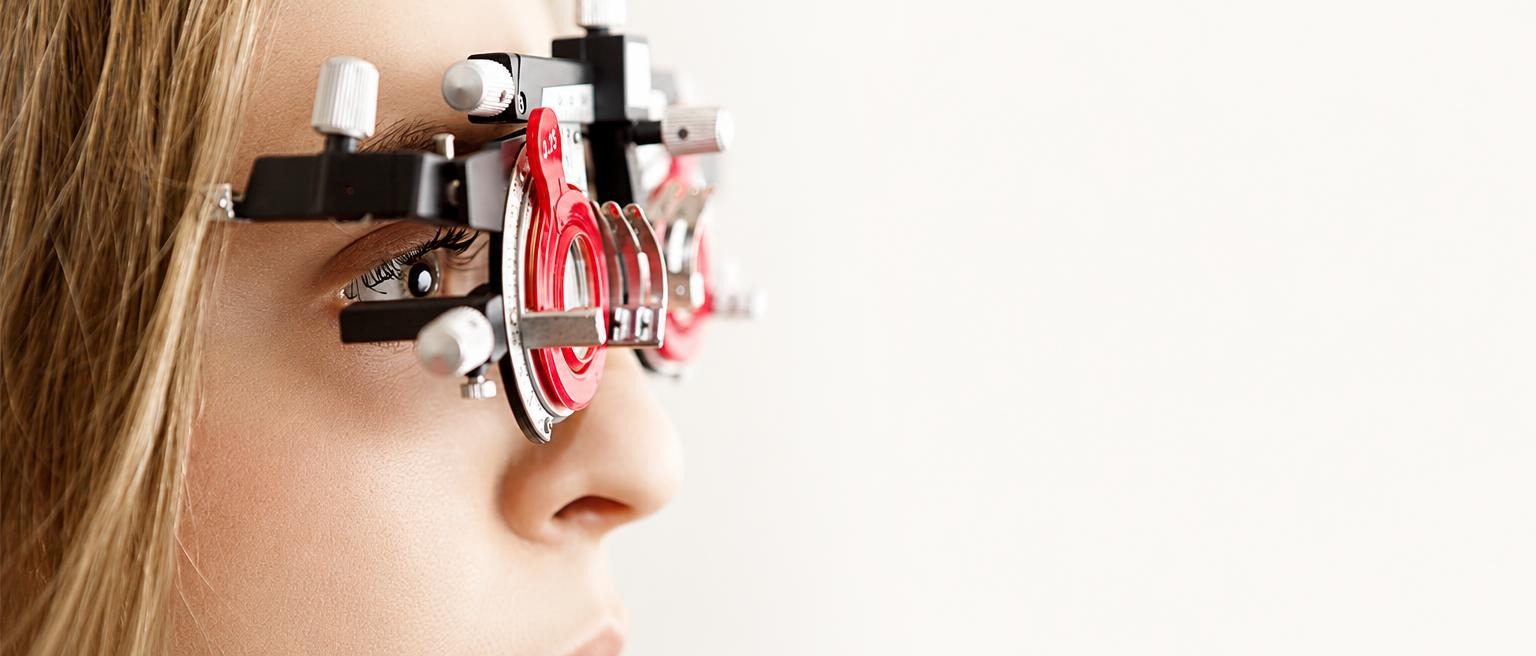
LASIK corrects nearsightedness, farsightedness and even astigmatism. With a technique called mono-vision, it can reduce the need for reading glasses among patients over age 40 who wear bifocals.
LASIK is the premier surgery for vision correction. It is quick, almost painless and there is little or no discomfort after the procedure. Vision recovery is rapid – patients report seeing 20/20 within 24 hours.
LASIK, often referred to as laser eye surgery or laser vision correction, is a type of refractive surgery for the correction of myopia, hyperopia, and astigmatism. LASIK surgery is performed by an ophthalmologist who uses a laser or microkeratome to reshape the eye’s cornea in order to improve visual acuity. For most patients, LASIK provides a permanent alternative to eyeglasses or contact lenses.
LASIK is most similar to another surgical corrective procedure, photorefractive keratectomy (PRK), and both represent advances over radial keratotomy in the surgical treatment of refractive errors of vision. For patients with moderate to high myopia or thin corneas which cannot be treated with LASIK and PRK, the phakic intraocular lens is an alternative.
These may disqualify a candidate from LASIK surgery. A comprehensive eye exam is required to be sure.
For your convenience, we are happy to provide LASIK pre-operative exams and consultations at our office.
Note that LASIK is an elective procedure and proper consideration must include the weight of personal needs, potential gain and willingness to accept the risks involved. There are no guarantees that LASIK will absolutely succeed to your expectations. The results are not always perfect vision. In some cases, your vision after LASIK may be permanently less clear than it was with glasses before LASIK. This outcome must be factored before deciding on LASIK surgery.
Certainly there is upside. In normal circumstances and conditions LASIK can reduce your dependence on glasses and almost always gives you the ability to function well without the need for glasses or contact lenses.
Filling in our patient history form (PDF) before your visit saves time at your pre-operative exam.
LASIK is an ambulatory, two-step procedure. You walk into the surgery center, have the procedure and walk out about an hour later. The surgery event is about 15 minutes for both eyes, but allowances should accommodate for time at the surgery location, perhaps even a bit more.
First, the surgeon creates a thin, hinged flap of tissue on your cornea with an instrument called a microkeratome, or laser.
This flap is folded back so the laser reshaping of your eye can begin.
After laser treatment, which lasts a minute or less, the flap is repositioned and the surgeon proceeds to your other eye.
Wavefront LASIK – wavefront-assisted, wavefront-guided or custom LASIK – uses laser treatment (ablation) mapped by computerized analysis. Wavefront-guided procedures are much more precise than ablations determined by using standard eyeglasses prescriptions.
They can correct subtle optical imperfections of the eye called “higher-order aberrations” that regular ablations cannot treat. Studies prove wavefront-guided ablations provide sharper vision than conventional, non-wavefront LASIK and can improve night-vision, eliminating or reducing the risk of halos or glare.
Following the LASIK procedure, you will use medicated eye drops and clear protective shields to cover your eyes. You can open your eyes and see well enough to walk without glasses, but you must not drive yourself home.
You will use medicated eye drops several times a day for a week or more to prevent infection and help the healing. You may also use artificial tears to keep your eyes moist and comfortable.
You should rest your eyes as much as possible the day of your surgery. You may find it more comfortable leaving the house lights on low dim.
The next day, you should see well enough to drive and resume your normal activities. Use care though not to rub your eyes until it is safe to do so.
You may be asked to return to visit your doctor the following day for an eye exam. They will want to check your vision and be sure your eyes appear to be healing as they should.
You will be given any additional instructions necessary about eye drops and/or artificial tears, and you can ask the doctor any questions you may have.
Postoperative care may be performed by an eye doctor other than your LASIK surgeon. This is referred to as co-management. We are happy to provide post-operative care for you at our office through a co-management agreement with your surgeon. Ask us for further details.
Though most patients see clearly within a day or so after LASIK, it can take several months before your eyes completely stabilize. Until then, improvements in your vision can still occur in fits and jumps. If several months pass and your vision is still blurred, be sure to communicate and visit with your LASIK surgeon. It may be appropriate to have a second LASIK surgery – an enhancement – to sharpen your eyesight further.
If an enhancement is not required, eyeglasses or contact lenses may be used to help. We will be happy to examine your eyes and discuss the options available to you.
Even if your vision seems perfect after LASIK, you may still require or be more comfortable with eyewear.
When outdoors, it’s optimal and sometimes urgent to protect your eyes from the sun’s strong and sometimes harmful rays. Use sunglasses that provide 100% UV protection. For sports sunglasses, the lenses need to have poly-carbonate for extra strength and protection. Anytime you work with power tools or do any activity where eye injury is possible, be sure to use safety glasses with poly-carbonate lenses.
If you’re over 40 (or close), it’s likely you’ll need reading glasses after LASIK. Many LASIK patients benefit from prescription eyeglasses for night driving. Even a mild prescription will make your vision sharper for added safety and comfort at night.

Remember to continue to schedule routine eye exams post-LASIK. Even with perfect vision you still need to have your eyes examined for glaucoma and other potential problems on a regular basis. Routine exams will help insure that your vision remains stable after LASIK.
Book a LASIK pre-operative exam and consultation with Lougheed Town Centre Optical & Optometry at our Burnaby office, and we will co-manage your care with your surgeon from your first assessment through your follow-up visits.